
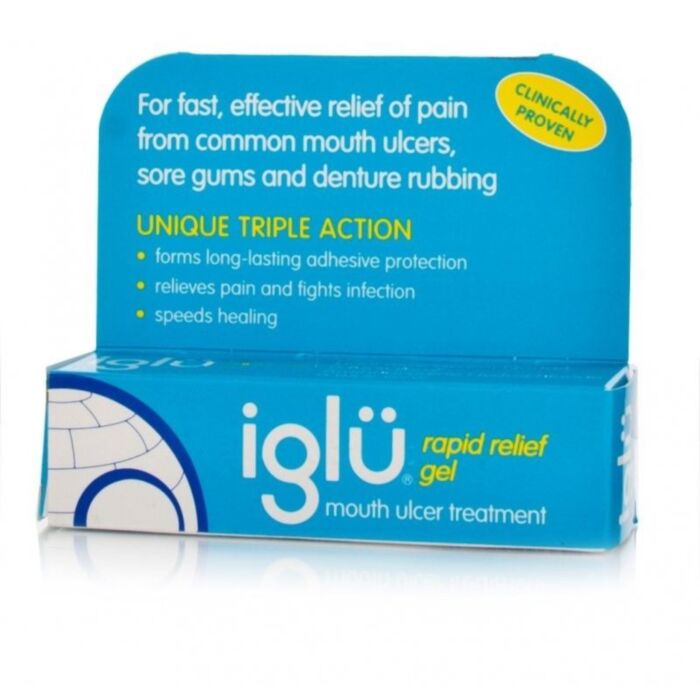
Iglu gel - Clinically Proven Mouth Ulcer Treatment
If you're looking for a fast-acting mouth ulcer treatment that will give you relief from pain and help to speed up the healing process, then Iglu gel is the perfect solution for you.
Iglu Gel is a fast-acting mouth ulcer treatment designed to provide relief from common mouth ulcers, sore gums, and irritation caused by dentures. The gel forms a protective, adhesive coating over the affected area, reducing pain and promoting healing.
Iglu Gel is suitable for adults, the elderly, and children over the age of 7. The product works in three key ways:
- Forms a smooth, flexible, and protective gel layer over the ulcer, shielding it from further irritation.
- Provides pain relief through lidocaine hydrochloride, a local anesthetic.
- Prevents infection with aminoacridine hydrochloride, an antiseptic.
Before You Use Iglu Gel
Do Not Use Iglu Gel If:
- You are allergic to lidocaine hydrochloride, aminoacridine hydrochloride, or any other ingredients listed in the product.
Important Considerations:
- Apply the gel sparingly to the affected area.
- Avoid contact with the eyes.
Using Other Medicines
Iglu Gel is not known to interact with other medications. However, consult your doctor or pharmacist if you are unsure.
Pregnancy and Breastfeeding
The safety of Iglu Gel during pregnancy or breastfeeding is not established. If you are pregnant or nursing, consult a healthcare professional before use.
Driving and Operating Machinery
Iglu Gel does not affect your ability to drive or operate machinery.
How to Use Iglu Gel
Instructions for Use:
For adults, the elderly, and children over 7 years:
- Wash your hands before and after application.
- Prepare the affected area by gently removing excess moisture or saliva using a clean tissue.
- Apply a small quantity of Iglu Gel to a clean, dry fingertip or cotton bud.
- Spread it over the ulcer in a single motion, avoiding dabbing. The gel will initially feel pasty but will form a flexible protective layer once in contact with saliva.
Reapplication:
- Apply as needed to maintain a protective coating over the ulcer.
- Each application usually lasts an hour or more but may require reapplication after eating or drinking.
- Avoid excessive application.
- If using for irritation caused by dentures, apply the gel when dentures are not being worn, such as at night.
What to Do in Case of Accidental Eye Contact
If the gel gets into the eyes, rinse thoroughly with water for 10-15 minutes while keeping the eyelids apart. Seek medical advice if irritation persists.
Overuse and Possible Side Effects
- Overuse may cause numbness, making it difficult to swallow.
- Accidental overuse could result in drowsiness, breathing difficulties, or low blood pressure. If any of these symptoms occur, seek immediate medical attention.
Possible Side Effects
While Iglu Gel is well-tolerated, some users may experience rare allergic reactions, such as wheezing or difficulty breathing. Stop using the gel and seek urgent medical attention if this occurs.
If you experience any side effects not listed here, consult your doctor, dentist, or pharmacist.
How to Store Iglu Gel
- Keep out of reach of children.
- Do not use after the expiry date printed on the tube or carton.
- Store below 25°C and replace the cap tightly after each use.
- If the nozzle becomes blocked due to moisture, clear it with a clean pin.
Iglu Gel Ingredients
Active ingredients:
- Lidocaine hydrochloride (0.66% w/w) – provides pain relief.
- Aminoacridine hydrochloride (0.05% w/w) – acts as an antiseptic.
Other ingredients:
- Carbomer
- Hydroxypropylcellulose
- White soft paraffin
- Liquid paraffin
- Peppermint oil
Product Information
- Appearance: Thick, pale yellow paste that turns into a flexible, adhesive gel when applied.
- Odor: Peppermint fragrance.
- Packaging: 8g tube.
Disclaimer: While we strive to provide accurate and up-to-date information, we are not responsible for any discrepancies or issues that may arise. The information provided should not be used as a substitute for professional medical advice. Always consult your physician or a qualified healthcare provider for any questions you may have regarding a medical condition or treatment.